Investment
BlackRock's Plan: Put Wall Street in a Wallet
Published on September 23, 2026. Lic. Moisés Iván Ríos Beitia
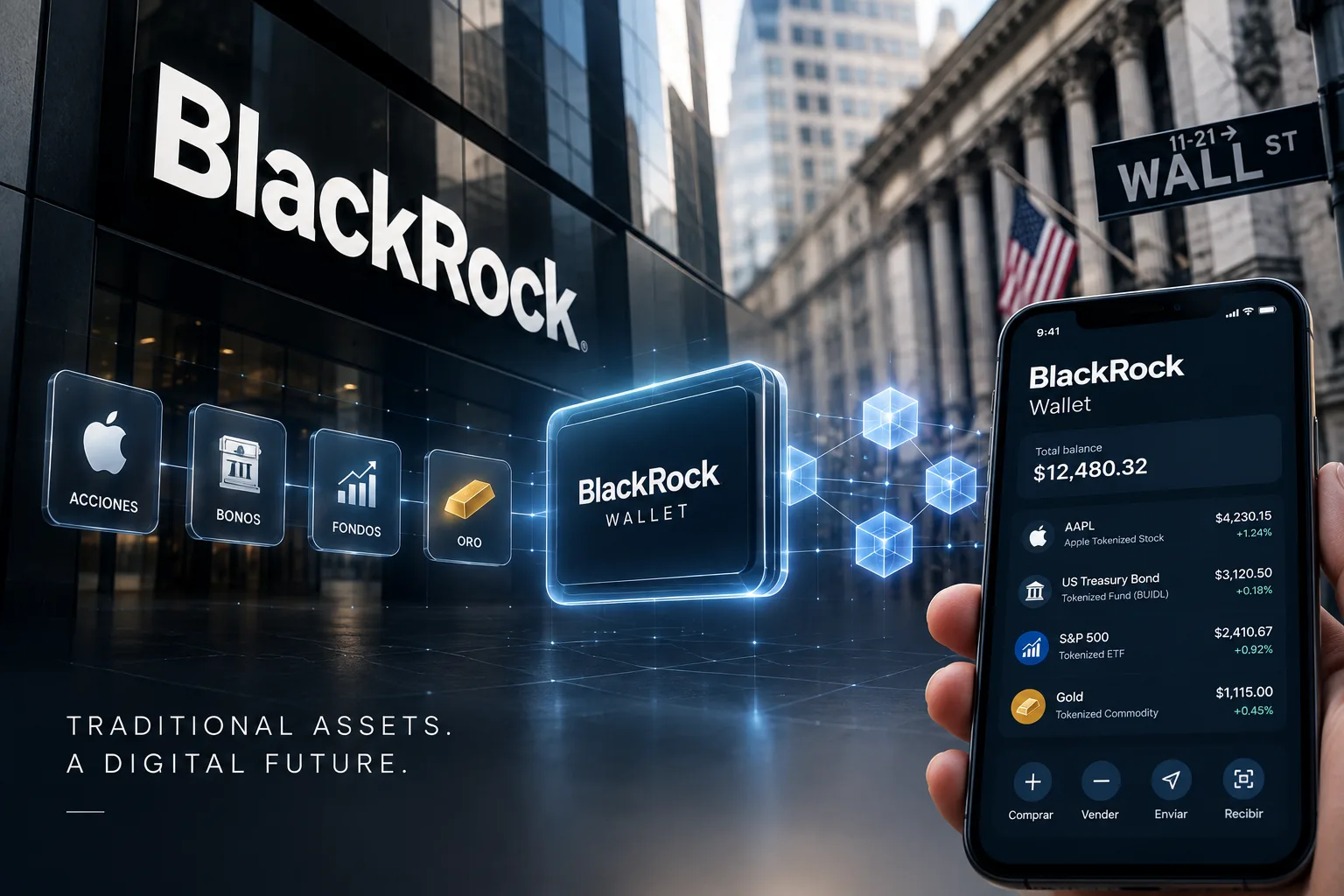
BlackRock is driving the tokenization of funds, debt, and stocks to bring traditional markets onto the blockchain. This move intersects with the race among several countries to digitize their currencies, although the actual market is still small and largely institutional.
BlackRock's Plan: Put Wall Street in a Wallet
Larry Fink doesn’t speak like a crypto evangelist. He speaks like the CEO of the world’s largest asset management firm. His message—repeated in letters to investors, at forums, and to regulators—is the same. The financial system still operates with outdated infrastructure. Stock trades take time to settle. Markets close. Buying a stake in a company or a fund is still more difficult than sending a payment via your phone.
Their solution has a technical name—tokenization—and a simple promise: to convert stocks, bonds, and funds into digital tokens that can be stored, transferred, and traded on the blockchain almost as if they were messages.
This isn't a lab experiment. BlackRock is already doing it.
From Public Debt to Tokens
The most well-known example is called BUIDL. It is a money market fund. It invests in U.S. Treasury bills, cash, and very short-term securities. The goal is not to speculate, but to preserve capital and generate a daily return.
The difference lies in the format. Instead of existing only in traditional books, BUIDL is issued as a token. It trades 24 hours a day. It can be used as collateral. And it has grown to become one of the world’s largest tokenized funds, with more than $2.5 billion. It is tokenized by Securitize, a platform in which BlackRock holds significant influence and which has become a key player in this industry.
More products followed. BlackRock added on-chain share classes for existing funds and a vehicle designed to serve as a reserve for stablecoin issuers. In Europe, it tokenized access to money market funds from its Institutional Cash Series—a portfolio worth hundreds of billions of dollars in euros, pounds, and dollars—using JPMorgan’s infrastructure. It also received approval in Hong Kong for a fund denominated in Hong Kong dollars.
The logic is clear. First, they tokenize “boring” money—the kind that corporate treasuries and large investors use to park liquidity. If that works, the next step is more ambitious.
The stock market, without calling for revolution
BlackRock isn't building its own stock exchange. It's pushing traditional stock exchanges to accept a second digital life for the same stocks.
That’s where Securitize comes in again. Together with Computershare—the transfer agent for more than half of the S&P 500—it has paved the way for publicly traded companies to issue direct ownership tokens, not just synthetic receipts. The idea is that investors can hold the stock either in the traditional system or in a wallet, without completely breaking current rules. There is talk of a market worth tens of trillions of dollars that, at least in theory, could begin to operate on-chain.
The New York Stock Exchange is developing a platform to trade tokenized stocks and ETFs 24 hours a day, with faster settlement and, in some models, financing in stablecoins. Nasdaq has sought its own shortcut, partnering with Kraken to bring tokenized versions to international clients. Securitize itself went so far as to list its shares on the NYSE and, on the very same day, tokenize a portion of them.
Fink sums it up with a phrase that sounds like both a marketing pitch and a threat. Every share and every bond could be tokenized. Markets that never close. Transactions that today take a day or two and tomorrow would be settled in seconds. Capital that today is tied up in settlement and could be reinvested immediately.
What Isn't True and What Is Actually Happening
There's a more sensational version of this story going around: that, because of BlackRock, many countries are going to tokenize their currencies. That's an exaggeration.
BlackRock does not dictate anyone’s monetary policy. What is happening is a convergence. While Wall Street is tokenizing funds and beginning to test digital stocks, governments are discussing how to digitize money. Some are working on central bank digital currencies. Others are working on stablecoins backed by the national currency. Still others are working on sovereign bonds issued on blockchain or on wholesale settlement systems using central bank money.
China has been using the e-CNY for years. Europe is moving forward with the digital euro and mechanisms to settle tokenized assets using central bank money. Japan is exploring a national infrastructure for stocks and government debt. Hong Kong combines regulated stablecoins, tokenized assets, and longer settlement periods. Several countries have already issued government debt in digital form.
BlackRock fits into this landscape in a different way. Its tokenized funds invest in U.S. debt. These tokens can serve as reserves or collateral in the world of stablecoins. Tokenized assets and digital money need each other. Without a high-quality digital cash, the tokenized market remains incomplete. Without substantial assets to tokenize, digital currencies remain limited to payments.
The Fine Print
The official narrative touts efficiency, inclusion, and modernization. The reality in 2026 is more modest.
The market for tokenized real assets—excluding stablecoins—is still in the tens of billions, not trillions. Tokenized stocks still represent a tiny fraction of the global equity market. Many of these products are designed for professional investors, not the average saver. Regulations vary from country to country. And the retail digital currencies that already exist have not won over the public as quickly as their promotional materials promised.
There is also political tension. Tokenization can lower costs and open up markets. It can also concentrate more power in the hands of those who control digital identity, access lists, transfer agents, and the rules governing who can hold the token. Fink calls for a common blockchain and less friction. Central banks respond that, if this scales up, final settlement must be conducted in sovereign currency, not just private tokens.
The remaining headline
BlackRock isn’t buying Bitcoin for the memes. It’s trying to redesign the pipeline through which stocks, funds, and debt flow. It starts with liquidity. Next come the stock exchanges. And inevitably, this intersects with the race among countries to maintain control of their currencies in a world where money, too, wants to be a token.
The question is no longer whether Wall Street will experiment with blockchain. That has already happened. The question is how much of the real market—the market for publicly traded companies, cash funds, and government debt—will end up residing in a wallet. And who will set the rules when that happens.