Real Estate & Investment
How to Buy Property in Panama as a Foreigner: A Complete Legal Guide
Published on July 13, 2026. Lic. Moisés Iván Ríos Beitia
A comprehensive step-by-step guide explaining legal rights, due diligence, pitfalls, property taxes, and residency options for foreign buyers in Panama.
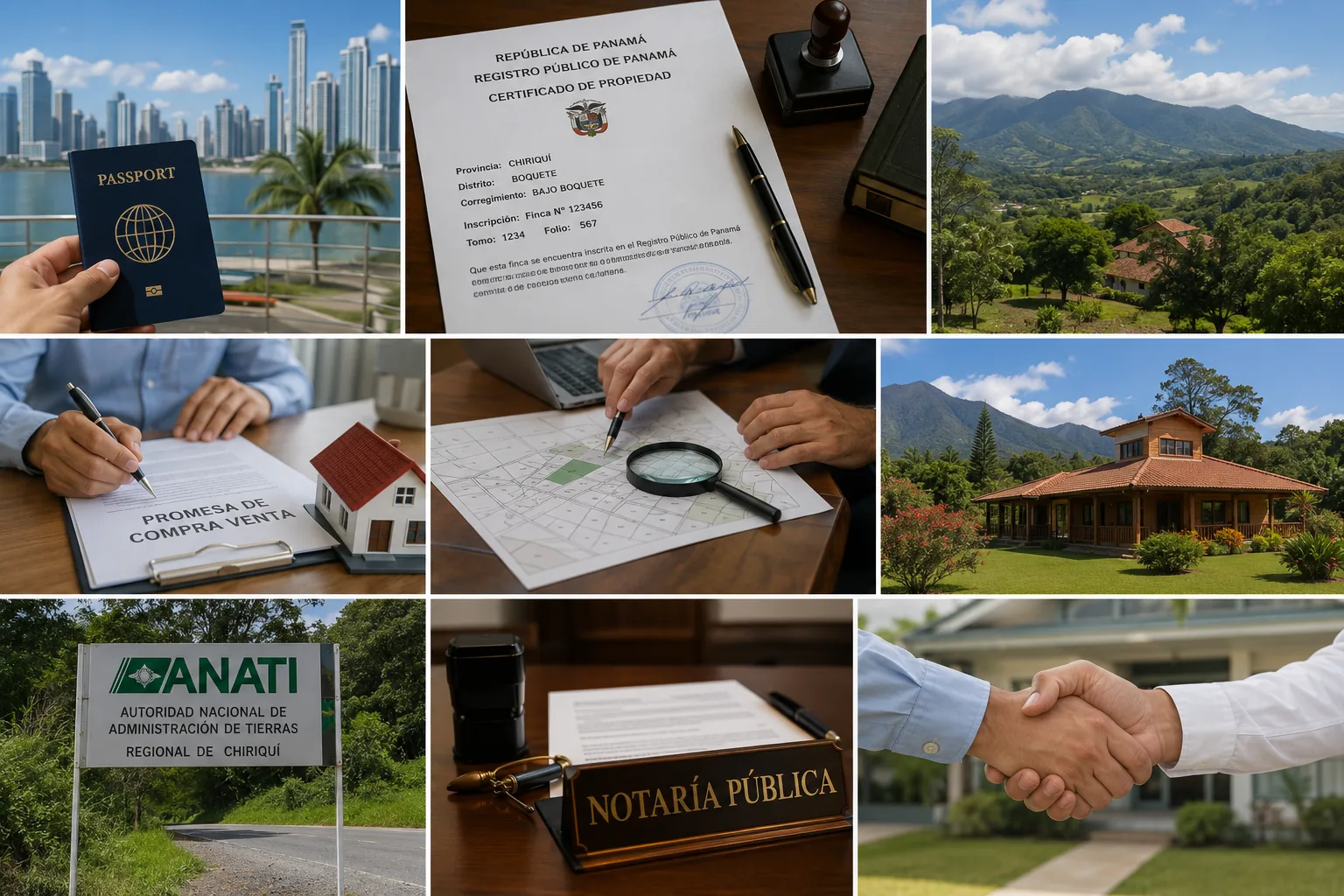
- Panama has consolidated itself as one of the most attractive destinations in Latin America for foreign real estate investment. The reason is simple: Panamanian law grants foreigners the same property rights as Panamanians. There are no special restrictions on buying a home, an apartment, or land in Boquete, Panama City, or any other region of the country.
- However, being able to buy is not the same as buying wisely. Every year, foreign investors face legal complications that could have been easily prevented with proper legal counsel from the very beginning of the process. Below, I explain what every foreigner must know before signing.
- ## Can a foreigner own property in Panama?
- Yes, the Panamanian Constitution guarantees foreigners the same private property rights as national citizens.
- The only relevant exception:
- Properties located within 10 kilometers of national borders and on certain islands are restricted for national security reasons. Outside of these limited zones (which includes Boquete, Volcan, and almost all of Chiriqui), a foreigner can acquire and register real estate in their own name without any issues.
- ## Property Title vs. Possessory Rights: The difference that could cost you everything
- This is the most critical part of the transaction and where the most expensive mistakes occur:
- Registered Title (Finca Titulada):
- The property is fully registered in the Public Registry of Panama, with a specific farm number, volume, and folio. This is the safest form of ownership, fully transferable, and eligible for bank financing.
- Possessory Rights (Derecho Posesorio):
- The occupant has physical possession of the land (recognized administratively by ANATI), but there is no registered property title. This is common in rural areas of Chiriqui and Bocas del Toro.
- Buying possessory rights is not illegal, but it carries high risks: lengthy titling processes, boundary disputes, and the inability to refinance or mortgage the property. It is essential to have an attorney perform a title search to verify if the land has a definitive title before delivering any funds.
- ## Due Diligence: The steps no buyer should skip
- Before signing any purchase contract or delivering good faith deposits, your attorney must verify the legal status of the property:
- Public Registry Title Search: Confirming the seller's true ownership and checking for active liens, mortgages, lawsuits, or encumbrances.
- Tax and Utility Clearances: Verifying that municipal taxes and basic utilities (water, electricity) are fully paid, as outstanding debts legally transfer to the new owner.
- Survey Map and Boundary Verification: Confirming that the physical boundaries on the ground match the catastrally registered survey map (crucial for mountain properties).
- Zoning and Land Use Permits: Ensuring that the permitted use of the land aligns with your project, particularly in areas near the Volcan Baru National Park.
- ## Property Taxes in Panama: What you need to budget for
- When structuring your purchase budget, you must consider the following taxes:
- Transaction Taxes:
- Transfer Tax (2%): Calculated on the sales price or cadastral registered value (whichever is higher). Legally, this tax is paid by the seller.
- Capital Gains Tax (3%): A flat tax on the sale of the asset, paid by the seller.
- Annual Property Tax:
- Property owners pay a progressive annual tax on the cadastral value ranging from 0.5% to 1.00%. However, there is a preferential regime called the Family Tax Patrimony (PFT) or Primary Residence, which fully exempts properties used as a family home up to a value of $120,000 USD.
- ## Residency Visas Through Real Estate Investment
- Panama offers excellent immigration programs that grant permanent residency through real estate acquisition:
- Qualified Investor Visa:
- Allows you to obtain permanent residency quickly (in about 30 days) through a minimum real estate investment of $300,000 USD free of liens, with funds coming from abroad.
- Economic Solvency Visa:
- Grants permanent residency by investing $300,000 USD in real estate in your personal name or through a private interest foundation.
- ## Bank Financing for Non-Resident Foreigners
- Panamanian banks offer mortgage financing to foreign buyers under specific terms:
- Down Payment: Local institutions generally require the foreign buyer to make a down payment of between 30% and 40% of the commercial valuation.
- Amortization Terms: Typically shorter than for residents, generally capped at 15 to 20 years.
- Documentation: You must present tax returns from your country of origin, certified credit reports, and bank statements.
- ## The Buying Process Step-by-Step
- A standard real estate transaction follows these key stages:
- Stage 1: Promissory Agreement
- A preliminary contract securing price and terms, backed by a good faith deposit (typically 10%).
- Stage 2: Due Diligence
- The period during which the attorney performs all physical and registry verifications of the property.
- Stage 3: Public Deed
- The formal transfer is drafted and signed before a Notary Public. As a notary public, I can directly authorize this document.
- Stage 4: Payment and Filing
- Liquidation of transfer taxes and submission of the deed to the Public Registry of Panama for official registration.
- ## Buying in Your Personal Name vs. Under a Corporation
- It is common for foreign investors to structure the purchase using a corporate entity:
- Asset Protection: Separates your real estate investment from any personal civil liability.
- Estate Planning: Simplifies the transfer of shares or control of the property to heirs, avoiding costly local probate courts.
- Privacy: Title registration is held under the corporation or foundation name rather than your direct personal name.
- ## Common Mistakes to Avoid
- To protect your investment in Boquete or the rest of Panama, avoid:
- Delivering deposits before an attorney completes the cadastral title search.
- Relying solely on verbal assertions from the seller or real estate agent.
- Neglecting to check for a legally registered right of way (easement), a frequent issue in Boquete's highlands.
- Buying possessory rights assuming they carry the same security as a registered title.
- ## Conclusion
- Purchasing property in Panama as a foreigner is safe and transparent if approached with the proper legal due diligence. The key to success lies in title verification, understanding tax implications, and securing expert guidance.
- If you are planning to purchase property in Boquete or anywhere else in Panama, my office is at your disposal to carry out the due diligence, corporate structuring, and notary formalization of the purchase.